 EN
EN
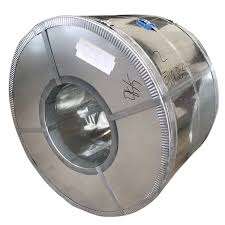
When engineers and procurement specialists evaluate flat steel products, surface quality consistently ranks among the most critical selection criteria. precision cold rolled steel has earned a strong reputation for delivering exceptionally smooth finishes, and understanding why this happens requires a closer look at the underlying metallurgical and mechanical processes. Precision cold rolled steel is not simply standard hot rolled material that has been cooled down. It is a distinctly manufactured product shaped through carefully controlled room-temperature reduction processes that fundamentally transform both the surface condition and the internal grain structure of the metal.
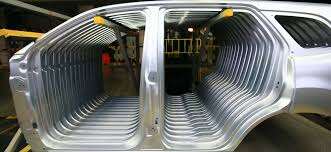
Precision cold rolled steel serves a vast range of industries, from automotive body panels and home appliance casings to precision engineering components and architectural cladding. In every one of these applications, the smoothness of the steel surface directly affects downstream performance — whether that means better paint adhesion, tighter dimensional tolerances, or cleaner weld seams. To appreciate why precision cold rolled steel consistently outperforms alternatives on surface finish, it is essential to examine the rolling process itself, the role of annealing, and the final skin-pass operation that gives precision cold rolled steel its signature texture.
The Cold Rolling Process and Surface Refinement
How Room-Temperature Rolling Creates a Smooth Surface
The defining characteristic of precision cold rolled steel begins at the rolling mill. Unlike hot rolling, which deforms steel at temperatures exceeding 1,000 degrees Celsius where the surface is vulnerable to oxidation and scale formation, cold rolling is performed at or near room temperature. During cold rolling, precision cold rolled steel passes through a series of hardened steel rolls under very high pressure. This mechanical compression forces the steel surface against mirror-polished roll surfaces, causing the microscopic peaks and valleys on the metal to flatten and consolidate. The result is a surface profile far smoother than anything achievable through hot rolling alone.
Each pass through the cold rolling mill progressively reduces the thickness of precision cold rolled steel while simultaneously refining the grain structure. The grains within the steel elongate under compressive force, and any residual surface irregularities are ironed out by successive roll contacts. This is why precision cold rolled steel achieves surface roughness values that are measured in micrometers rather than the coarser textures typical of hot-rolled products. For manufacturers that require clean, flat surfaces for coating, stamping, or forming, precision cold rolled steel provides the consistent starting quality that downstream processes demand.
Oxidation Elimination as a Surface Quality Driver
Precision cold rolled steel benefits significantly from the absence of high-temperature oxidation during its primary forming stage. Hot rolled steel emerges from the mill with a layer of iron oxide scale adhered to the surface. Although this scale is removed by acid pickling before cold rolling begins, the surface beneath can still retain micro-pits and irregularities. Cold rolling compresses these residual imperfections, and because precision cold rolled steel is never exposed to oxidizing temperatures during the rolling stage itself, no new scale can form. This oxidation-free surface development is a key reason why precision cold rolled steel finishes are consistently cleaner and more uniform than hot-rolled counterparts.
Annealing and Its Role in Surface and Structure Quality
Restoring Ductility While Preserving Surface Integrity
Cold rolling hardens precision cold rolled steel through a phenomenon called work hardening. While this increases tensile strength, it also reduces ductility, which can be problematic for applications requiring deep drawing or complex forming. To restore the necessary mechanical balance, precision cold rolled steel undergoes an annealing process in which the steel is heated in a controlled, protective atmosphere furnace. The protective atmosphere — typically a mixture of hydrogen and nitrogen — prevents oxidation and keeps the surface of precision cold rolled steel clean during heat treatment. This means that after annealing, precision cold rolled steel retains its smooth surface without the scale contamination that would occur in an open-air environment.
The annealing step is not merely a mechanical recovery process. It also relieves internal stresses accumulated during cold rolling, which helps precision cold rolled steel maintain its flatness and dimensional stability. Manufacturers who work with precision cold rolled steel in precision-stamped or close-tolerance applications understand that a thermally relieved steel blank behaves far more predictably during forming than a work-hardened one. The combination of controlled annealing and protective atmosphere treatment is one of the reasons precision cold rolled steel is trusted in applications where dimensional accuracy is as important as surface quality.
Batch Versus Continuous Annealing Effects on Finish
Precision cold rolled steel can be annealed using either batch box annealing or continuous annealing lines. Continuous annealing subjects precision cold rolled steel to rapid, uniform heating and cooling cycles, which generally produces a slightly brighter and more consistent surface finish compared to box annealing. Box annealing, by contrast, operates over longer cycles and can yield slightly different surface characteristics depending on coil positioning and atmosphere uniformity. The choice between these methods affects the final surface brightness of precision cold rolled steel, and informed buyers will specify the annealing method based on the surface requirements of their particular end use.
The Skin-Pass Operation and Final Surface Definition
Why Skin Passing Is the Final Finish Determinant
After annealing, precision cold rolled steel typically passes through a skin-pass mill, also known as a temper mill. This final light rolling step applies a very small reduction — usually less than two percent — to the surface of precision cold rolled steel. The skin-pass operation serves multiple purposes simultaneously. It eliminates the yield point elongation that could cause stretcher-strain markings during downstream forming, it improves the flatness of precision cold rolled steel by correcting any residual waviness, and most importantly for surface quality, it imparts a controlled surface texture. The rolls used in skin passing can have varying degrees of roughness, allowing manufacturers to tailor the surface of precision cold rolled steel to specific roughness targets required by customers.
The skin-pass step is the final refinement that distinguishes mill-finished precision cold rolled steel from raw annealed material. By adjusting roll texture and pass parameters, producers can deliver precision cold rolled steel with surfaces ranging from very bright and smooth to a defined matte finish depending on what subsequent processing steps such as painting or electroplating require. This level of surface control is simply not available with hot-rolled products, and it is a primary reason why precision cold rolled steel is specified for visible, coated, or high-tolerance surfaces across demanding industries.
FAQ
What makes precision cold rolled steel smoother than hot rolled steel?
Precision cold rolled steel is processed at room temperature without oxidation, and the high rolling pressures flatten surface irregularities against polished roll faces. Hot rolled steel forms at high temperatures where scale develops on the surface, resulting in a much rougher texture. The controlled environment of cold rolling and subsequent skin-pass treatment gives precision cold rolled steel a measurably smoother and more consistent surface.
Is precision cold rolled steel suitable for painted or coated applications?
Yes, precision cold rolled steel is widely used as a substrate for painting, powder coating, and electroplating precisely because of its smooth, clean surface. The uniformity of precision cold rolled steel ensures consistent adhesion and minimizes surface defects in the final coated product. Automotive and appliance manufacturers routinely specify precision cold rolled steel for visible exterior panels where finish quality is critical.
How does annealing atmosphere affect precision cold rolled steel surface quality?
The atmosphere inside the annealing furnace plays a direct role in maintaining the surface cleanliness of precision cold rolled steel. A hydrogen-nitrogen protective atmosphere prevents oxidation during heat treatment, which means precision cold rolled steel exits the furnace with the same clean surface it had before annealing. Without this atmosphere control, even a brief exposure to oxygen at elevated temperatures would discolor and roughen the surface of precision cold rolled steel.