 EN
EN
When engineers and procurement specialists evaluate corrosion-resistant materials, hot dipped galvanized steel consistently stands apart from alternatives. The reason lies not just in the thickness of its zinc layer, but in the extraordinary metallurgical bond that forms during production. Understanding why hot dipped galvanized steel achieves this level of adhesion helps buyers make smarter material decisions and avoid costly failures in the field.
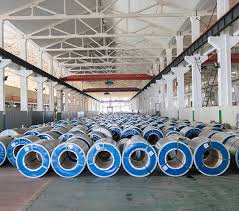
Hot dipped galvanized steel is produced by immersing cleaned steel into a bath of molten zinc at approximately 450 degrees Celsius. This process creates a series of zinc-iron alloy layers that bond directly to the steel substrate at the atomic level. No other galvanizing method produces the same depth of intermetallic bonding, which is the core reason hot dipped galvanized steel delivers adhesion that electroplated or spray-coated alternatives simply cannot match.
The Metallurgical Bond Behind Zinc Adhesion
How Intermetallic Layers Form in Hot Dipped Galvanized Steel
When hot dipped galvanized steel is created, the molten zinc reacts with iron atoms in the base steel to form distinct intermetallic layers: a gamma layer, a delta layer, and a zeta layer, each progressively transitioning toward the outer pure zinc layer. These layers are not applied coatings in the traditional sense. They are the product of a controlled chemical reaction, and that reaction is what makes hot dipped galvanized steel so adhesion-reliable. Each intermetallic zone gradually changes in composition, creating a smooth gradient from steel to zinc rather than an abrupt interface.
This gradient structure is critical. In hot dipped galvanized steel, the coating and the substrate are chemically integrated, not physically stacked. The result is a zinc coating that cannot peel, flake, or delaminate under normal mechanical stress. Even when hot dipped galvanized steel is bent, stamped, or cut, the coating follows the steel without separating at the interface, a performance characteristic that painted or powder-coated steel cannot replicate.
Why Surface Preparation Intensifies Adhesion in Hot Dipped Galvanized Steel
Before steel enters the zinc bath, it undergoes rigorous cleaning involving degreasing, acid pickling, and fluxing. These steps remove all oxides and surface contaminants that would otherwise prevent zinc from reacting directly with the iron. Because hot dipped galvanized steel begins with a chemically pure steel surface, the molten zinc makes immediate and complete contact across the entire substrate. This thorough preparation is one of the reasons hot dipped galvanized steel achieves such consistent and uniform adhesion compared to processes where surface prep is less controlled.
Structural and Environmental Durability of the Coating
Coating Thickness and Uniformity in Hot Dipped Galvanized Steel
Hot dipped galvanized steel typically carries a zinc coating that ranges from 45 to over 85 microns depending on steel composition and bath immersion time. This thickness exceeds what electroplating can economically produce, and it provides a substantial reservoir of sacrificial zinc to protect the base metal. Because the coating on hot dipped galvanized steel is formed through diffusion and reaction rather than deposition, it naturally conforms to edges, welds, and corners where thin applied coatings tend to be weakest.
The uniformity of the zinc layer in hot dipped galvanized steel is also superior in complex geometries. When structural components like angles, channels, or hollow sections are galvanized, the molten zinc flows into recesses and internal surfaces. This self-covering property means hot dipped galvanized steel protects areas that paint brushes or spray equipment simply cannot reach reliably. For industrial buyers, this translates to a coating with no hidden weak points.
Cathodic Protection and the Role of Zinc in Hot Dipped Galvanized Steel
Beyond its physical barrier function, the zinc coating on hot dipped galvanized steel acts as a sacrificial anode. Zinc is electrochemically active and corrodes preferentially when exposed to moisture and oxygen, sparing the underlying steel. This cathodic protection is especially important at cut edges or small surface damage points. Even if the zinc coating on hot dipped galvanized steel is scratched or nicked, the surrounding zinc continues to protect the exposed steel by migrating electrochemically across the damaged zone. No painted surface offers this self-healing mechanism, which is a fundamental reason hot dipped galvanized steel outlasts coated alternatives in aggressive environments.
Industrial Applications Where Adhesion Quality Matters Most
Why Structural Projects Depend on Hot Dipped Galvanized Steel
In construction, infrastructure, and heavy industry, hot dipped galvanized steel is chosen specifically because the coating will not fail before the structure does. Bridges, transmission towers, highway guardrails, and building frames all rely on hot dipped galvanized steel to deliver decades of corrosion resistance without recoating. The adhesion quality of hot dipped galvanized steel means that maintenance cycles are dramatically extended, reducing lifetime costs for asset owners who cannot afford unexpected surface failures.
Agricultural and coastal environments present some of the harshest conditions for steel. Hot dipped galvanized steel is routinely specified for grain storage systems, marine walkways, fencing, and port infrastructure precisely because its zinc-iron bond withstands salt spray, humidity, and chemical exposure. The strong adhesion in hot dipped galvanized steel ensures the coating does not blister or separate even after years of direct environmental contact, making it the preferred choice where repainting would be impractical or prohibitively expensive.
Fabrication Compatibility and Post-Processing of Hot Dipped Galvanized Steel
Hot dipped galvanized steel is compatible with welding, drilling, and mechanical fastening, provided appropriate procedures are followed. The robust coating on hot dipped galvanized steel allows fabricators to cut and reassemble structural components with confidence that the majority of the protective surface remains intact. Where cut edges are exposed, zinc-rich touch-up compounds restore cathodic coverage, maintaining the integrity that makes hot dipped galvanized steel such a dependable long-term material choice.
FAQ
What makes hot dipped galvanized steel different from electrogalvanized steel?
Hot dipped galvanized steel forms zinc-iron intermetallic layers through a molten bath reaction, creating a metallurgical bond. Electrogalvanized steel deposits a thin zinc layer electrically, which sits on the surface without forming alloy layers, resulting in lower adhesion strength and reduced corrosion protection compared to hot dipped galvanized steel.
Can hot dipped galvanized steel be painted for additional protection?
Yes, hot dipped galvanized steel can be painted after proper surface preparation such as sweep blasting or application of a wash primer. This duplex system combines the sacrificial zinc protection of hot dipped galvanized steel with an additional paint barrier, significantly extending service life in extreme environments.
How long does the zinc coating on hot dipped galvanized steel typically last?
The service life of hot dipped galvanized steel depends on environmental exposure. In rural or sheltered conditions, hot dipped galvanized steel can provide 70 or more years of protection. In industrial or coastal environments, hot dipped galvanized steel typically offers 20 to 40 years before maintenance is required, making it one of the most cost-effective long-term corrosion protection solutions available.